When Storms Strike, Your Roof Takes the First Hit
A severe storm can undo years of home maintenance in a matter of hours. The stress of assessing damage, filing insurance claims, and coordinating repairs is real, and the costs add up fast if you don’t act quickly.
Why Roofs Are the Most Vulnerable Part of Your Home
Your roof is your home’s first line of defense against wind, rain, and hail. Unlike exterior walls or foundations, roofing materials (shingles, flashing, and underlayment) take the full force of every storm. More than 40% of all homeowners’ insurance claims are attributed to wind and hail damage annually. Storm damage is one of the most common and costly home services calls a homeowner will face.
How Storm Damage Can Cascade Into Bigger Problems
Roof damage rarely stays on the roof. A compromised shingle or cracked flashing lets water in, and the chain reaction moves fast. Soaked insulation, warped subflooring, stained ceilings, swollen cabinetry, damaged walls. All of it can follow within days.
Let’s walk through exactly what to inspect, who to call, and in what order. The goal is simple: protect your home’s value and avoid turning a manageable repair into a full-scale renovation.
Understanding the Types of Storm Damage to Your Roof
Storm damage falls into three categories: wind, hail, and water. Each creates distinct problems that can escalate well beyond the roof if left unaddressed.
Wind, Hail, and Water: The Three Main Culprits
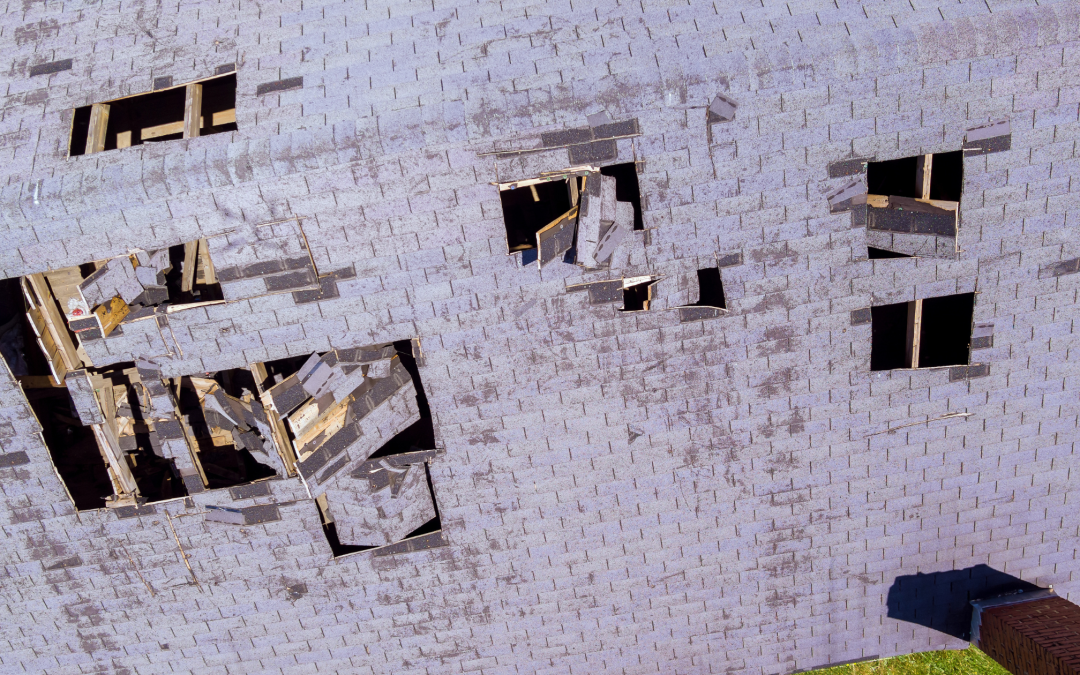
Wind is usually the most visible offender. Strong gusts lift shingle edges, crack adhesive seals, or tear shingles off entirely, leaving the underlayment and decking exposed to the elements.
Hail damage is more subtle and frequently missed by untrained eyes. Impact bruises the soft asphalt layer of a shingle and knocks loose the protective granules, the small sand-like coating that shields roofing material from UV rays and moisture. Once those granules are gone, the shingle deteriorates significantly faster.
Water damage often develops last but causes the most widespread harm. Pooling on flat or low-slope sections, ice dams forming at eave lines in winter, and water backing up under shingles can all drive moisture deep into the roof assembly.
Visible vs. Hidden Damage – Why What You Can’t See Matters Most
A missing shingle is easy to spot. The structural damage happening behind your walls and above your ceilings is not.
Think of a small roof gap like a slow drip into a bucket. Manageable at first, catastrophic once it overflows. Water entering through a compromised roof travels downward through the attic, saturating the insulation, staining the ceiling drywall, and eventually reaching the subfloor. Once moisture reaches that level, your home’s interior service needs multiply: flooring warps, cabinet bases swell, and mold becomes a real concern.
A professional post-storm inspection catches hidden damage early. That inspection is the difference between a straightforward repair and a full interior renovation.
Step-by-Step: What to Do Immediately After Storm Damage
The first 24-48 hours after a storm are the most critical for protecting your home, your safety, and your insurance claim. Following a clear sequence helps you avoid costly mistakes and puts you in the strongest position with insurers and contractors.
What to Check Before Going Outside
Before you step outside, check for downed power lines, gas leaks, and visible structural damage from your windows. Downed lines are live until the utility company confirms otherwise.
If you smell gas or notice significant sagging in your roofline, evacuate the home immediately and call emergency services from a safe location.
Once it’s safe, do only a ground-level visual inspection. Never climb onto a damaged roof yourself. Licensed roofing professionals assess post-storm roofs with proper fall-protection equipment, gear that most homeowners don’t have.
Documenting the Damage for Insurance Purposes
Before any cleanup or temporary repairs, document everything. Walk the perimeter of your home and photograph every area of visible damage: missing shingles, dented gutters, broken flashing, standing water, and debris impact points.
Contact your homeowner’s insurance provider promptly to open a claim. Delays can complicate coverage. Then call a licensed local roofing contractor for a professional assessment of the damage. This is different from storm chasers or door-to-door contractors. Those home services offers that appear hours after a storm often lack the licensing, insurance, and accountability that protect you long-term.
How Roof Damage Leads to Interior Home Improvement Needs
Roof damage rarely stays on the roof. Once water finds its way through a compromised shingle, flashing, or underlayment, it follows a predictable path: attic insulation, ceiling joists, interior walls, and eventually your floors. Interior home services that follow often cost more than the roof repair itself.
Water Intrusion and Its Impact on Flooring and Subfloors
Water moves downward and outward, saturating every porous material along the way. By the time you notice a stain on your ceiling, moisture has likely reached the structural layers beneath your finished floor. The subfloor, typically oriented strand board (OSB) or plywood, absorbs water quickly and begins to swell, buckle, and delaminate.
Surface repairs aren’t enough once the subfloor is compromised. Standard practice requires removing the finished flooring, assessing the subfloor for structural damage, replacing any degraded panels, and then installing new flooring. Skip that step, and you’re looking at uneven surfaces, soft spots underfoot, and premature wear on whatever new material goes on top.
The longer water sits, the wider the damage spreads. Acting fast, within 24 to 48 hours of a leak, dramatically reduces how much flooring needs to come out.
Cabinet Installation and Countertop Repairs After Water Damage
Kitchen and bathroom cabinets are especially vulnerable after a ceiling or wall leak. Cabinet boxes are typically made from particleboard or MDF (medium-density fiberboard), both of which swell and warp when exposed to sustained moisture. Once the structural integrity is gone, a surface fix won’t hold. A full cabinet installation or replacement is often the only reliable solution.
Countertops face similar risks. Laminate surfaces bubble and peel when moisture infiltrates from above or behind. Even stone countertops can suffer if the substrate beneath them softens. Ceiling drips and wall seepage in kitchens and bathrooms can quietly undermine countertop stability over weeks or months.
Bottom line: addressing roof damage promptly limits how far water penetrates your home and keeps a roofing problem from becoming a full-scale interior home services project.
Hiring the Right Home Services Professionals for Storm Recovery
Choosing the right professionals after storm damage affects your home’s structural integrity, your insurance reimbursement, and your family’s safety.
What to Look for in a Licensed Roofing Contractor
The most important criteria for any roofing contractor are a valid state license, general liability insurance, and verifiable local references. Always request a written estimate that breaks down labor, materials, and the project timeline before signing anything. Ask specifically about warranty terms. Reputable roofers typically offer both a manufacturer’s material warranty and a separate workmanship warranty.
Be cautious of storm-chasing contractors. These are out-of-town crews who appear door-to-door immediately after a major weather event, often pressuring homeowners to sign contracts on the spot. A licensed local contractor with an established reputation has far more accountability than someone who won’t be around after the job is done.
Coordinating Interior Repairs: Flooring, Cabinet, and Finish Work
Working with a single home services provider who handles both exterior and interior repairs simplifies scheduling, reduces communication gaps, and creates a cleaner paper trail for insurance claims.
Before any new flooring goes down, a professional installation contractor will assess subfloor moisture levels. This step is critical after water intrusion. Skipping this step allows moisture to accumulate beneath the new material, leading to warping, mold growth, and premature failure. Getting every scope of work documented in writing protects you during the insurance reimbursement process and ensures nothing gets overlooked.
Frequently Asked Questions About Storm Damage and Home Repair
After a storm, homeowners typically have urgent questions about what needs fixing, who to call, and what order to tackle repairs. Here are straightforward answers to the most common ones.
Q: What should I do first after storm damage to my home?
Contact your insurance company within 24-48 hours of the storm. This is the most important step after ensuring your family’s safety. Document all visible damage with photos and video before touching anything. Avoid making permanent repairs until an adjuster has assessed the damage, but temporary fixes, such as tarping a damaged roof, are usually covered and can prevent further loss.
Q: How do I know if interior damage, like flooring or cabinets, is covered after a storm?
Interior damage directly caused by a storm, such as water-soaked flooring or warped cabinetry from a roof leak, is typically covered under a standard homeowners’ insurance policy. Coverage depends on the cause: sudden storm damage is usually covered, while pre-existing neglect or gradual leaks often are not. Review your policy’s “covered perils” section and ask your adjuster specifically about interior home services tied to the storm event.
Q: Can I replace storm-damaged flooring or countertops while other repairs are still in progress?
Scheduling interior installations before structural and waterproofing repairs are complete is not recommended. Bringing new flooring or countertops into a space that still has moisture intrusion risks warping, mold growth, and wasted material costs. Coordinate with your contractor to confirm the space is fully dry and structurally sound before scheduling any finish work.
Q: How do I find a reliable contractor for post-storm home repairs?
A reliable post-storm contractor should be licensed, insured, and verifiable through your state’s contractor licensing board. Be cautious of unsolicited door-to-door offers that appear immediately after a storm. These are a known red flag for storm-chasing scams. Ask for written estimates, check references, and confirm the contractor has specific experience with the type of repair your home needs, whether that’s roofing, structural work, or interior finish installation.
Conclusion: Protect Your Home From the Roof Down
Storm damage rarely stops at the shingles. Water intrusion, structural stress, and debris impact ripple through your attic, walls, and floors. A fast, coordinated response is the most important step you can take after a major weather event.
Document the damage thoroughly, contact your insurance adjuster promptly, and work with licensed professionals for every repair, from roofing down to your interior finishes. The right home services team keeps small problems from becoming expensive, long-term ones.When storm damage affects your floors, cabinets, or countertops, you need an installer who shows up prepared and gets the job done right the first time. Ready to restore your home? Contact Crown Installs Inc. for a free consultation. We’re here to help you rebuild with confidence.