The storm rolled through around nine on a Tuesday in July. Power blinked twice, the dog lost his mind, and by morning the only evidence was some branches on the driveway and somebody’s patio umbrella face down in the yard.
You looked at the roof from the end of the driveway – It looked fine. You dragged the branches to the curb and went to work.
That’s how most storm damage in Georgia gets missed. It rarely announces itself. It shows up eight months later as a water stain on a bedroom ceiling, by which point the storm is a memory and your claim window may have closed.
Why a Georgia summer does damage you can’t see from the driveway.
North and central Georgia sit in a busy severe weather corridor, and summer is the peak of it. The National Weather Service office in Peachtree City, which covers metro Atlanta, records damaging thunderstorm winds an average of 19 days a year. July is the worst month for it, with more than 500 wind damage events logged over the past 40 years. Large hail falls an average of 7 days annually. Statewide, the Georgia Emergency Management Agency reports about 75 days per year with straight-line winds exceeding 58 mph.
There’s a threshold problem here. A storm only earns a severe thunderstorm warning at gusts over 57 mph or hail an inch across. Plenty that never trip that line still throw dime-sized hail at a wall for ten minutes or push 45-mph gusts under a shingle edge. Your house doesn’t care whether the storm qualifies.
Wind and hail are the most frequently claimed cause of home damage nationally. The Insurance Information Institute puts it at roughly one in 35 insured homes filing a wind or hail claim in a given year, ahead of water damage, fire, and theft.
Start with the roof, and stay on the ground
Grab binoculars and walk the perimeter. Don’t climb up there.
From the yard, look for shingles that are lifted, curled, or missing tabs along the edges and ridge line. Dark or oddly shiny patches usually mean the granule layer got stripped. Check the ridge caps, which take the wind first, then the flashing at chimneys and valleys, and the rubber boots around plumbing vents, which fail more often than the shingles.
Then look down. Granules piling up along the foundation line or in the driveway mean your roof is shedding its surface. Some loss is normal. A fresh pile after a storm isn’t.
What you can’t see from the ground is bruising. Hail crushes the mat under a shingle without breaking the surface. It feels like a soft dimple under your thumb, reads as nothing from twenty feet away, and takes years off the roof. Crown Installs handles these inspections at no cost, and more often than not the answer is that your roof is fine.
Check the soft metals before you check the siding.
Here’s a shortcut. Hail leaves its signature on soft metal long before it shows on siding. Walk out to your AC unit and look at the aluminum fins, then check the mailbox and any car that was parked outside. If those are pocked with dents, your siding and windows took the same beating.
Now the walls. Focus on the sides facing the storm’s approach, usually west and south in north Georgia. On vinyl, hail shows up as dents, cracked panels, or small punched holes, often clustered in a band. On wood and fiber cement, look for chipped paint and cracks radiating out from an impact point.
Run your hand along the bottom edge of the panels. Anything loose or unclipped means wind got underneath, and wind that gets under siding drives rain in behind it.
Which brings up housewrap. If the barrier behind your siding is old, torn, or was never taped properly at the seams, water is sitting against your sheathing right now with nothing telling you. Siding replacement is the only practical moment to fix it, which is why Crown Installs checks the wrap whenever panels come off.
Windows take hail at the worst possible angle.
Most storm damage to windows isn’t a shattered pane. Look for chips or star-shaped marks in the glass and hairline cracks radiating from a single point. Check whether the space between the panes has become hazy, indicating the seal on the insulated glass unit has failed. That fog can take months to show, so a window that looked clear in July may look milky by October.
Check the frames too. Wind pressure can rock a frame just enough that the sash no longer sits square, which you’ll notice as a window that suddenly sticks or won’t lock. And if the caulk where the frame meets the siding has pulled away, that’s an open path for water.
Doors, thresholds, and the gap you didn’t have in May
Dents in steel and fiberglass slabs show up best if you look across the surface at a low angle. If a door sticks or the deadbolt no longer lines up, the frame probably shifts under wind pressure.
Then do the daylight test. Close the door, stand inside with the lights off, and look at the perimeter. Daylight at the corners means the weatherstripping is compressed or torn. Wood doors swell at the bottom rail after a wet summer and tend to stay that way.
The damage that shows up in September
Pick a bright afternoon, go into the attic, and kill the lights. Pinholes of daylight through the roof deck require immediate attention. Look for dark staining around nail shanks, damp sheathing, matted insulation.
Downstairs, watch for ceiling stains near exterior walls, bubbling paint, and a musty smell in closets on an outside wall.
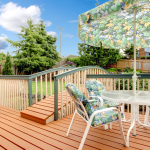
Your deck spent the summer soaking
The failure point is rarely the part you’re standing on. Check where the deck attaches to the house. That ledger connection accounts for the large majority of deck collapses, and if the flashing above it loosened or corroded, water has been running behind it all season.
Push on the railing. Wobble means fasteners have worked loose. Then walk it barefoot and note any soft spots, especially in the boards closest to the house.
Waiting until spring is the expensive choice
Most Georgia homeowners policies require prompt notice of a loss, usually worded “as soon as practicable.” Many also include a suit-against-us clause limiting legal action to one year from the date of loss. Georgia’s statute of limitations for property damage is four years under O.C.G.A. § 9-3-30, but your policy can validly shorten that window, so the policy language governs.
There’s a practical problem too. Adjusters verify claims against Storm Prediction Center records for your location and date, and the longer the gap, the harder it becomes to prove that his storm caused the damage rather than ordinary wear. Photograph what you find and note the date.
How to tell a storm chaser from an actual contractor
After any significant hail event, out-of-state crews flood metro Atlanta neighborhoods.
Georgia law is specific about what they can’t do. Under O.C.G.A. § 10-1-393.12, a residential roofing contractor cannot pay, waive, or rebate any portion of your insurance deductible, or advertise that they will. They also can’t negotiate your claim unless they’re separately licensed as a public adjuster. The Insurance Commissioner confirmed in a 2018 bulletin that violations constitute insurance fraud, and you’re exposed to it.
So if someone offers you a free roof by covering your deductible, that’s your answer. Ask for a local address, a Georgia license, a certificate of insurance, and a written scope before anyone touches the house. Crown Installs works out of Cartersville and serves North Georgia and the surrounding areas, which mostly means we’re still around in February if something comes up.
Frequently asked questions
How long do I have to file a storm damage claim in Georgia?
There’s no single statutory deadline, but most policies require prompt notice and many limit legal action to one year from the date of loss. Report within days, not months, and check your policy for a stated notice period.
Can hail damage my siding and windows even if the roof looks fine?
Yes, and it happens often. Hail arrives at an angle, so a storm with strong wind can hit a wall harder than the roof plane above it. Inspect the storm-facing side of the house on its own.
Do I need an inspection if I never heard a hail warning?
Possibly. Hail under one inch doesn’t trigger a severe thunderstorm warning but can still strip granules and dent siding. If your AC fins or mailbox are dented, something hit your house regardless of the radar. A free inspection from Crown Installs can settle it.
Will filing a wind or hail claim raise my premium?
A single weather-related claim typically affects rates less than multiple claims in a short period, though it varies by carrier. Rate increases across Georgia are often region-wide rather than tied to one house.
Tips From Our Owner Stephen Slade
If you suspect your home took damage during a summer storm, keep these tips in mind before you start cleaning up or making repairs:
- Take photos before you touch anything. Document exterior damage, interior damage, water intrusion, and damaged belongings before cleanup begins.
- Get video too. Photos capture the details, while video can help show the overall extent and location of the damage.
- Protect your home from further damage. If it’s safe, take temporary steps like covering an opening or removing standing water to keep the problem from getting worse.
- Save every receipt. Keep records of emergency repairs, cleanup, materials, and other storm-related expenses.
- Don’t rush into permanent repairs. Make sure the damage is thoroughly documented and, when appropriate, inspected before removing damaged materials or starting permanent work.
- Be cautious about signing anything under pressure. Take the time to understand the damage and your options before committing to repairs.
- Know when to bring in a professional. If the damage is significant or you’re unsure what you’re looking at, contact your insurer and a qualified professional promptly.
Stephen’s #1 tip: Document first. Protect the home second. Then determine the right long-term repair.
Get eyes on it before the weather turns
Finding damage isn’t the bad outcome. Finding it in March, learning your claim window closed in July, and paying for a roof out of pocket is.
Walk the perimeter this weekend with binoculars and this list. If anything looks off, Crown Installs offers free storm-damage inspections for roofing, siding, windows, doors, and decks throughout our service area. No obligation, and a straight answer either way.